Ujjwala Palem
Life Coach · Data Engineer · Adventurer
Speed is a habit. Slowness is a rebellion. And I don't mean the kind of slowness that comes from doing nothing — I mean the radical, deliberate act of choosing depth over velocity in a world that rewards the opposite.
Speed is a habit. Slowness is a rebellion. And I don't mean the kind of slowness that comes from doing nothing — I mean the radical, deliberate act of choosing depth over velocity in a world that rewards the opposite.
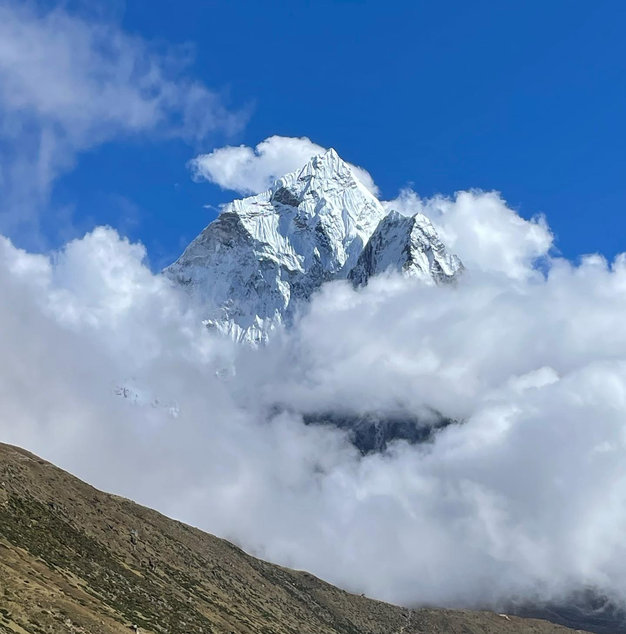
I figured this out not in a yoga studio or a therapist's office, but at 4,200 meters above sea level on the Himalayan trail to Everest Base Camp. My body had no choice. At that altitude, the air is so thin that moving fast isn't just uncomfortable — it's actually dangerous. You acclimate or you go home.
What nobody tells you about high-altitude trekking is that it dismantles your entire relationship with productivity. Back home, I could fill twelve windows on my monitor simultaneously. I could think about three data pipelines, a team meeting agenda, and what to make for dinner all at the same time. On that trail, I could only ever think about one thing: the next step.
The Urgency Addiction
Here's something I noticed about myself when I returned: I was bored within forty-eight hours. Not bored in the boring sense — bored in the way a person gets when their nervous system is calibrated for constant stimulation and suddenly nothing is pinging, alerting, or demanding.
I'd built a very sophisticated addiction to urgency. Not the firefighting kind — the low-grade hum of always having something to optimize. A Slack message that could wait but didn't have to. An email draft that could be improved. A report that could be re-sliced just one more time. I'd mistaken busyness for aliveness.
The interesting thing about working in data is that you're surrounded by speed. Real-time pipelines, instant dashboards, sub-second query results. The entire apparatus of my professional life is engineered to eliminate latency. And I'd imported that logic into my personal life without realizing it.
You're not busy because life is fast. You're busy because your nervous system is addicted to urgency, your identity is fused with achievement, and your worth is denominated in output.
What Slowness Actually Looks Like
I want to be precise here because slow down is one of those phrases that means nothing until it means something. I'm not talking about bubble baths. I'm not talking about a digital detox weekend or deleting Instagram for Lent.
I'm talking about what happens when you eat a meal without looking at your phone and you notice — actually notice — that the soup has three distinct layers of flavor that dissolve in a specific sequence. I'm talking about what happens when you let a question sit unanswered for a full day before responding, and the answer that arrives is three times better than the one you would have fired off in ninety seconds.
In data engineering, there's a concept called eventual consistency — the idea that a distributed system doesn't have to be in perfect sync at every millisecond to be accurate. It just has to arrive at the truth, eventually. I think a lot of our best decisions work the same way. We don't need to know the answer right now. We just need to trust that if we create the conditions for thinking, the answer will arrive.
A Small Practice, Not a Lifestyle Overhaul
I want to be realistic with you. I still have fast days. I still have weeks where I'm in five time zones' worth of meetings and I eat lunch standing up over my keyboard. Slowness, for me, isn't a personality transplant. It's a practice — something I return to rather than something I've perfected.
The most useful thing I've found is this: pick one thing per day that you do completely, before you do anything else. Not the most important thing. Not the most urgent thing. Just one thing that you give your whole attention to until it's finished. For me, it's usually coffee. I make it slowly, I drink it standing at the window, and I do not look at my phone. It takes eleven minutes. And those eleven minutes set a different kind of tone than the morning where my phone is in my hand before my feet hit the floor.
That's it. Not a revolution — an eleven-minute act of quiet rebellion. And somehow, repeatedly, it changes how the rest of the day goes.
The Deeper Reason This Is Hard
We don't slow down because we're afraid of what we'll find in the quiet. That's the real thing. The busyness is insulation. If we're always moving, we don't have to sit with the questions we've been avoiding: Am I doing work that matters? Is this relationship what I want it to be? What would I do if I wasn't afraid of judgment?
Slowness forces confrontation with yourself. That's why it's an act of courage, not indulgence.
The mountain didn't care how many projects I had open back home. It had one requirement: presence. And in that requirement, it gave me something I hadn't had in years — a clear, still mind that could finally hear itself think.
That's the art of slowing down. Not doing less. Hearing more.